At a glance
The essentials
How a hair system works, how it is attached and what makes a professional fitting look natural. A practical starting point if you are exploring hair replacement.
Hair replacement, without an operation
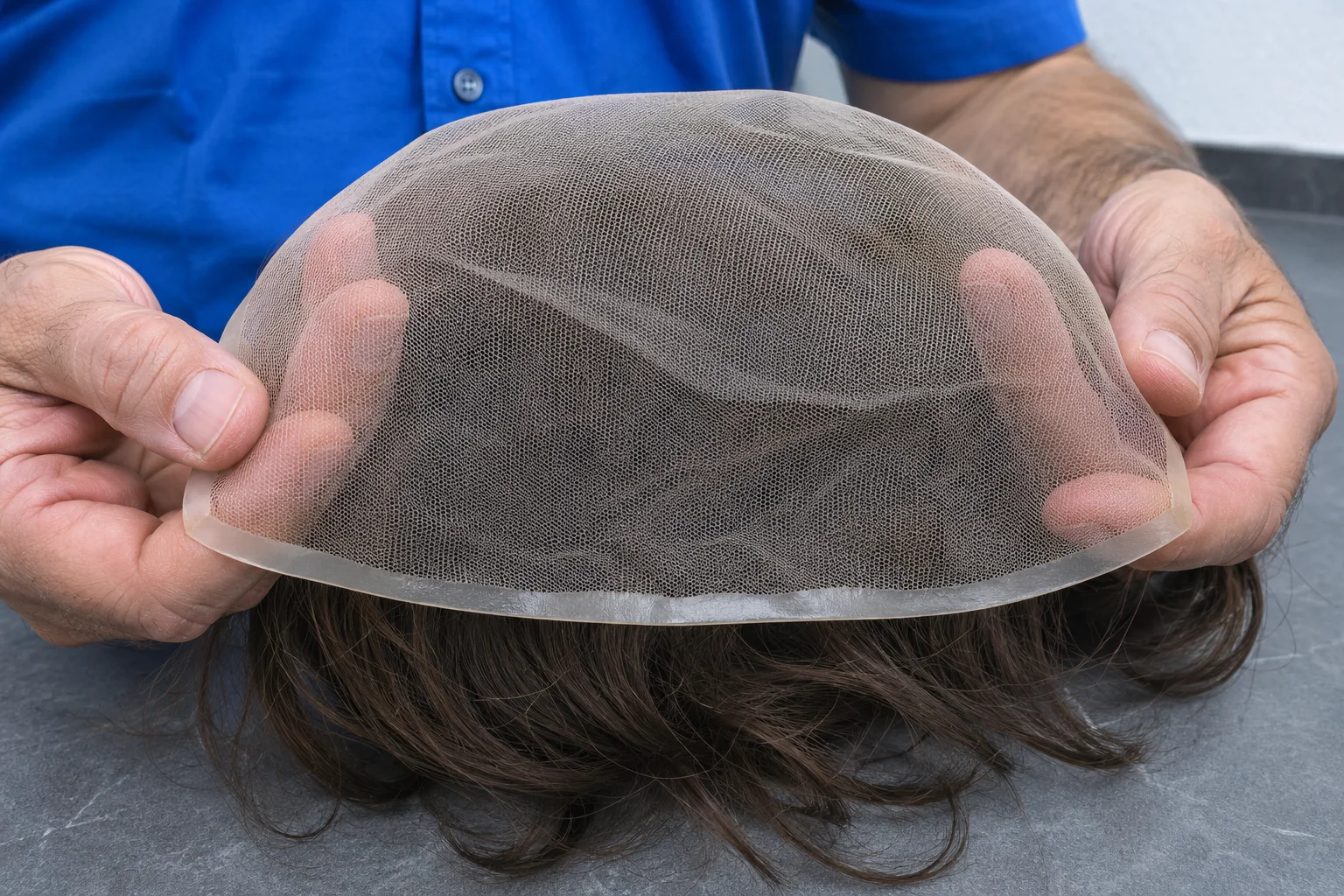
A hair system is a piece of replacement hair secured to a fine base that sits over an area of hair loss. It is matched to your colour, texture and preferred style, then cut and blended with the hair around it. The result is a fuller hairstyle without moving hair follicles or having surgery.
You may also hear the words hairpiece, hair prosthesis or non-surgical hair replacement. Names vary, but the useful questions are the same: what is the base made of, how is it attached, how will it look on you and what care will it need? A system supplies the hair you see. It does not make new hair grow from your scalp.
What makes up a hair system?
The base is the part that holds the hair. Lace bases use a fine mesh; polyurethane bases, often called skin bases, use a thin film. Some systems combine materials. Each construction has a different balance of appearance, airflow, handling and durability. The finest base is not automatically the best choice for every wearer.
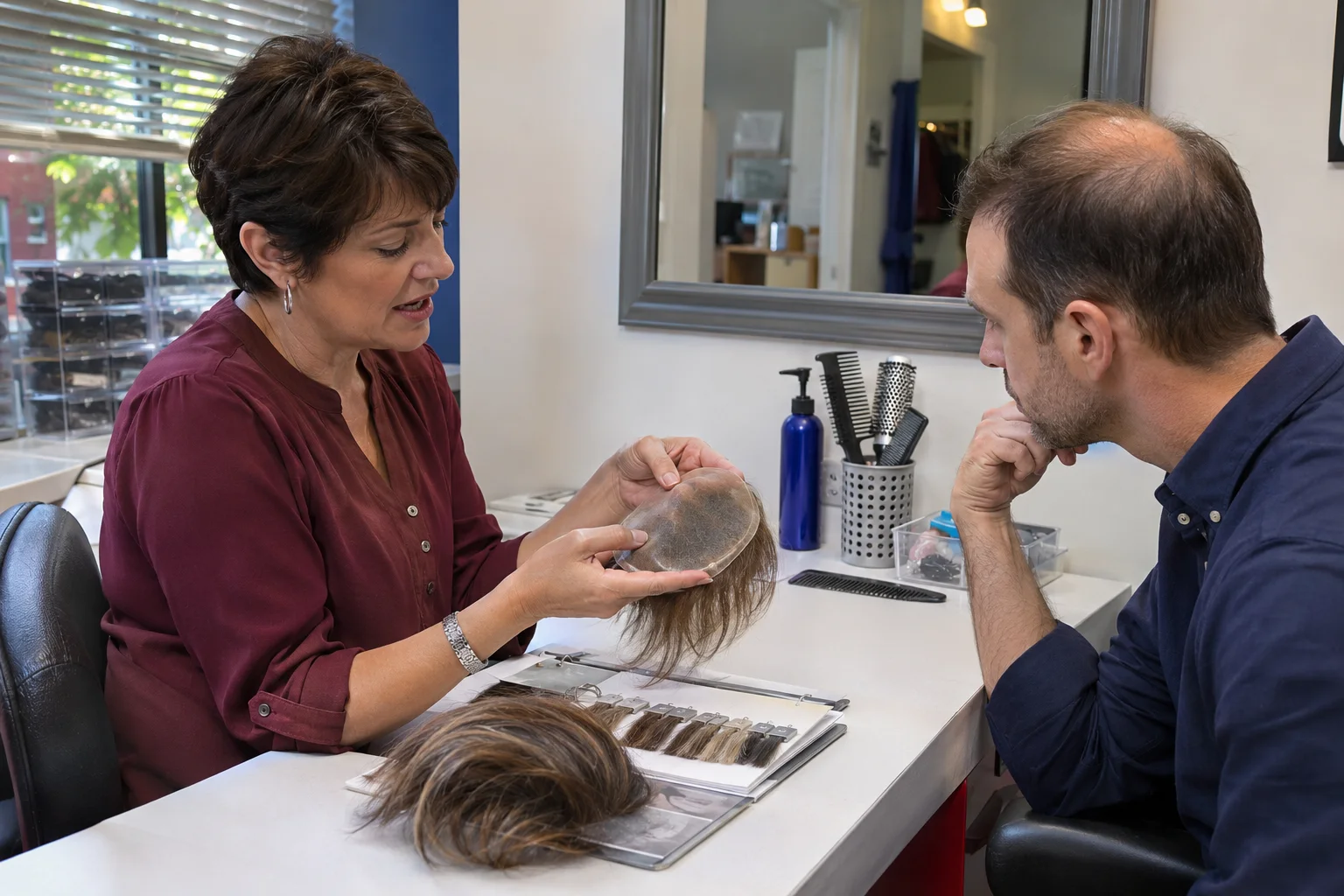
Hair is selected with more than colour in mind. Curl, direction, length, density and the amount of grey all affect how convincingly the system blends. A naturally receding hairline with a little grey may suit one person much better than the dense, straight hairline they first picked from a photograph.
How does it stay in place?
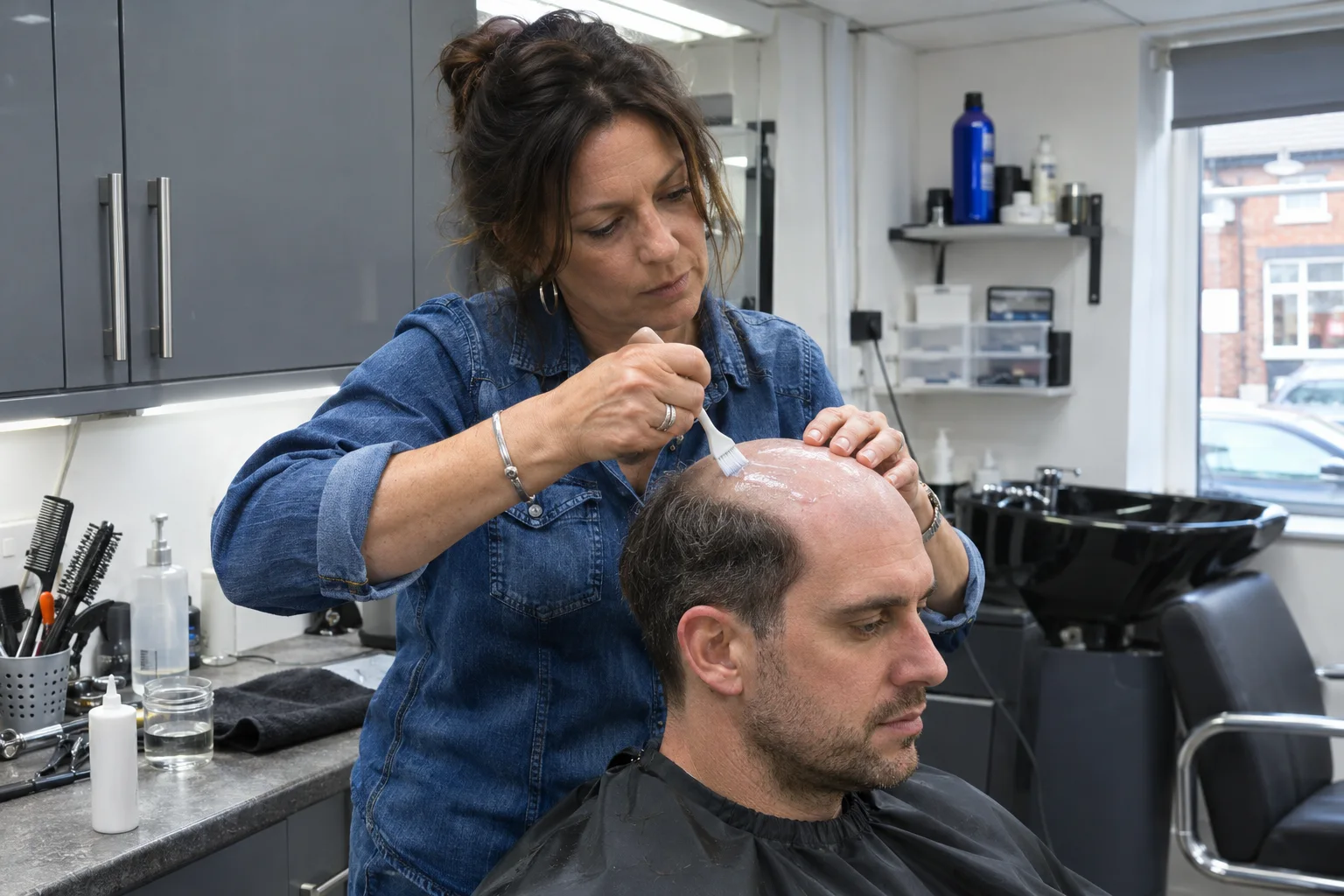
Bonded systems are attached using products intended for hair replacement, usually specialist tape, liquid adhesive or a combination. Your fitter chooses the attachment method around the base, your skin, your activities and your maintenance routine. Some hair replacement options use clips or other removable fittings instead.
Bonded does not mean permanently fixed. The system needs to be removed periodically so the base and scalp can be cleaned and the attachment renewed. Your fitter should explain the likely refit schedule and any initial waiting period before washing or exercise. Always follow the instructions for the products actually used on your system.
Why the fitting matters as much as the hair
A convincing result starts before the attachment. Your fitter considers your hair loss pattern, proportions, existing hair and the style you want. The base must sit correctly; the hairline needs a believable position; the cut must connect naturally with the sides and back. Those decisions work together.
Bring a photograph of yourself with a style you liked, as well as any reference styles. Your own photographs often say more about the look you want than a celebrity haircut. It is also worth being honest about styling: if you normally spend two minutes on your hair, choose a finish you can comfortably maintain in that time.
What changes when you start wearing one?
You will have a care routine, maintenance appointments and eventual replacement systems to plan for. You can often wash, sleep and exercise in a suitably fitted bonded system, but the details depend on its construction and attachment. Your first appointment should cover everyday life as well as the first-day result.
- Ask how to wash and dry your particular system.
- Find out when your first refit should be booked.
- Request a breakdown of fitting, maintenance and replacement costs.
- Know who to contact if the hairline lifts or your scalp feels uncomfortable.
Start with a conversation, not a guess
At NIC in Morley, Leeds, we have worked with hair replacement for more than 30 years. We can show you what the materials feel like, talk through the hairstyle you have in mind and explain what living with a system would involve for you.
You do not need to know the terminology before you come in. If you know what you would like to change about your hair, that is enough to start.