At a glance
The essentials
Get clear answers on natural appearance, hairlines, comfort, maintenance and costs before you choose your first hair replacement system.
Arrive with your life, not a technical specification
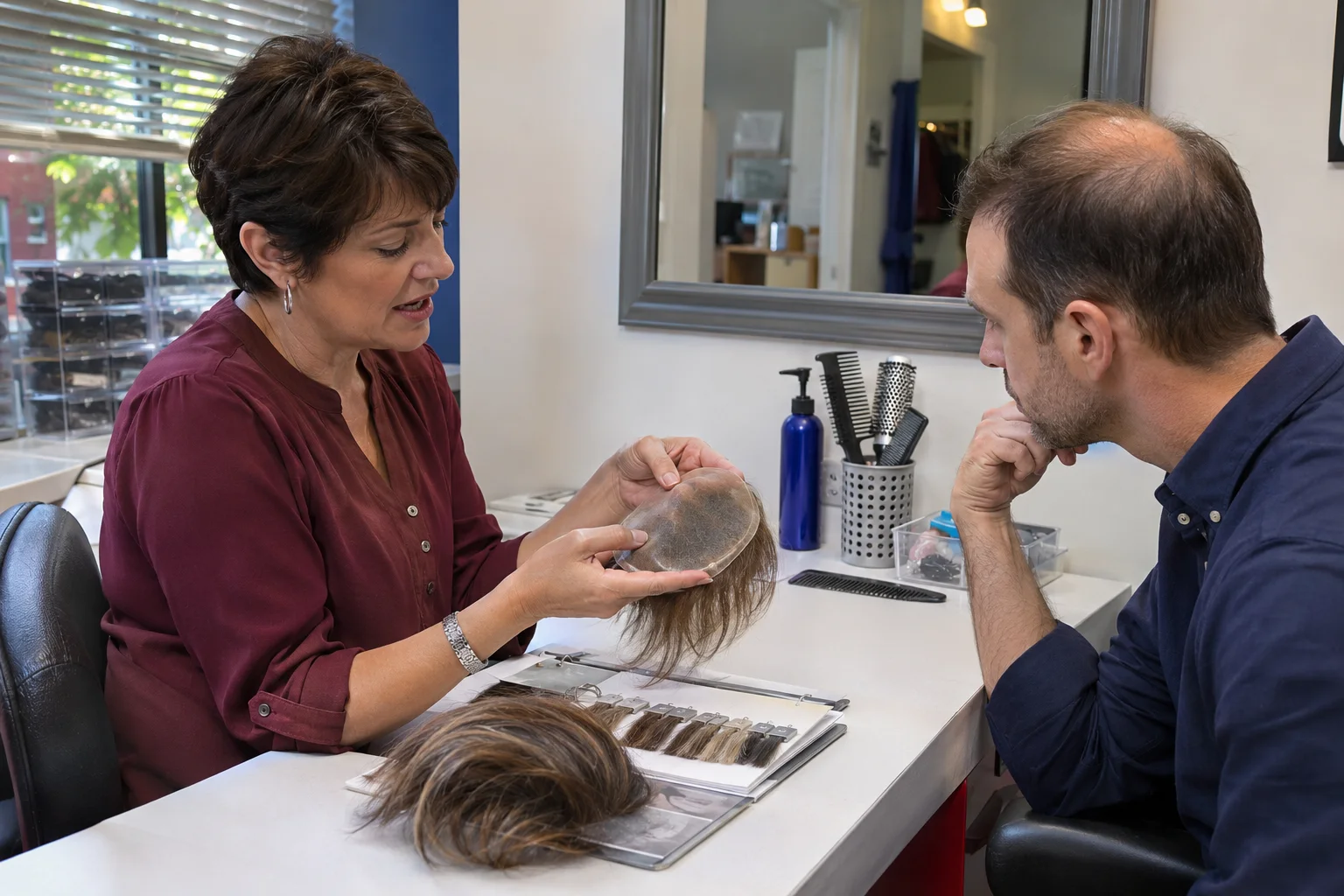
You do not need to learn every base type before a consultation. A good starting point is what you would like to change about your hair and what you want to keep. Bring photographs of a style you like, and mention your work, exercise, holidays and the time you normally spend getting ready.
It can help to write down the questions you feel embarrassed to ask. Whether someone can feel the edge, what happens in the wind or how you tell a partner are perfectly ordinary concerns. The consultation is the place to talk through them without feeling rushed.
Questions 1 to 3: what will my hair actually look like?
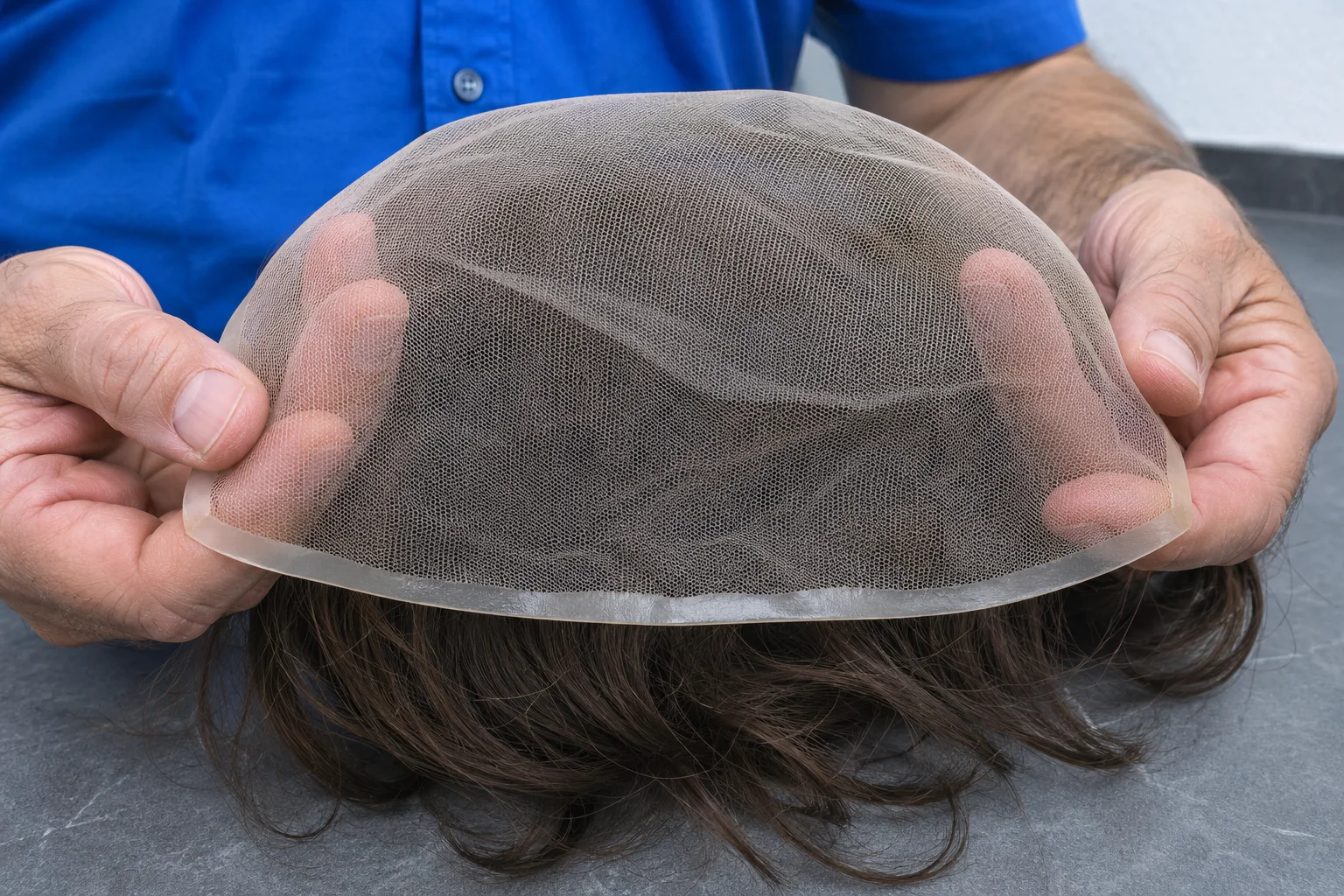
- 1. What coverage, base and attachment would you recommend for my hair loss, and why?
- 2. How will you match my colour, texture, grey and density to my own hair?
- 3. Where will the hairline sit, and can I see examples of a similar age and hairstyle?
Look at the proposed shape as well as the amount of hair. A lower, denser hairline can look dramatic in a photograph but feel unfamiliar on your face. Ask what can be adjusted during fitting and how you will agree the cut before the final styling.
Ask whether any images you are shown are real client results or illustrations. An example is most useful when you understand what has been fitted and how similar the starting point is to your own.
Questions 4 to 6: how will it fit into my day?
- 4. Can I sleep, shower, swim and exercise in this particular system?
- 5. What should I expect to feel at the base or hairline, including when someone touches my hair?
- 6. Do I need to shave an area, and what happens if I decide to stop wearing the system?
Discuss the specific things you do rather than asking only whether the hold is strong. A gym session, a helmet and a beach holiday involve different kinds of sweat, friction and water exposure. Your fitter should explain which activities need extra planning.
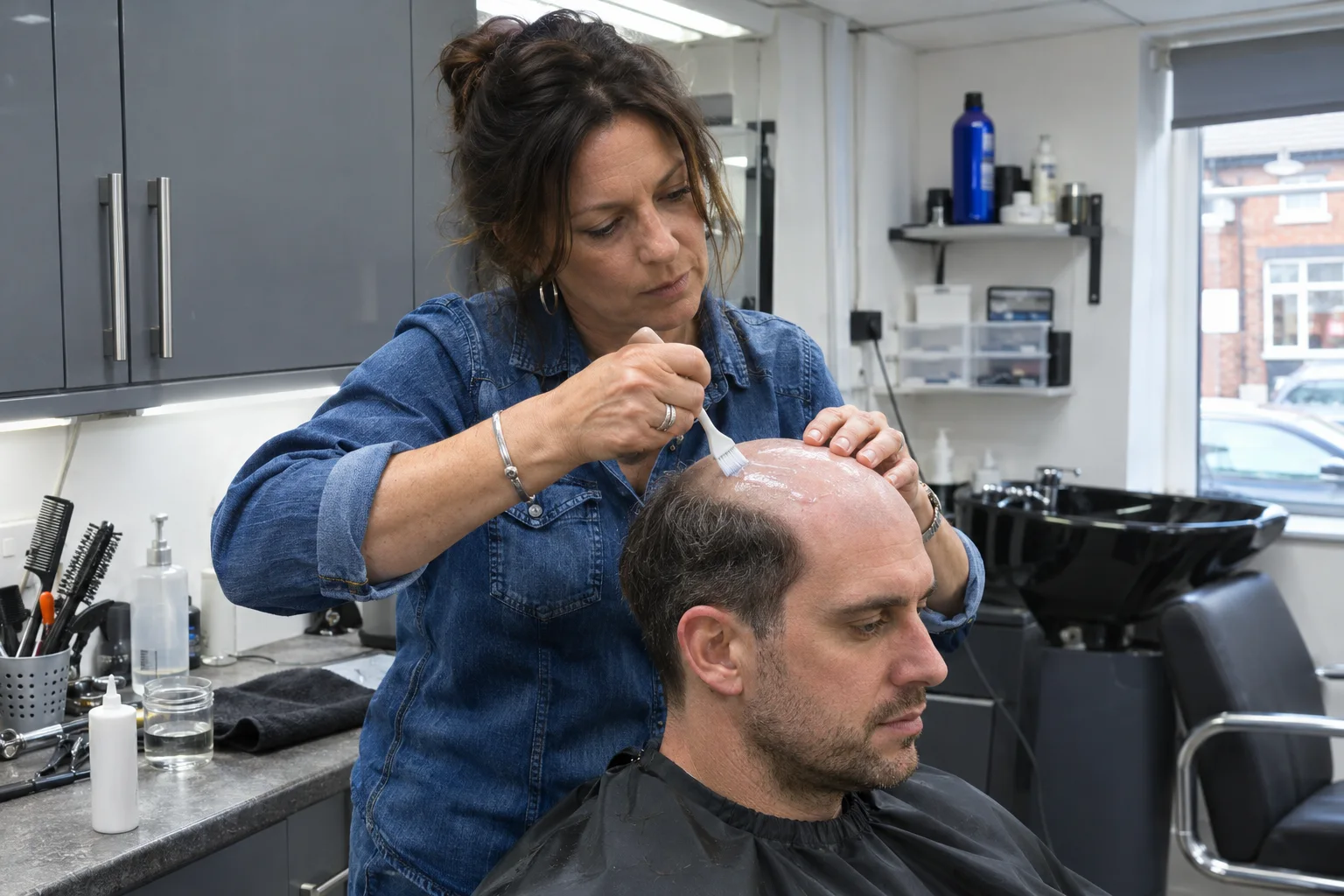
If your scalp is sensitive or you have reacted to adhesives before, mention it before anything is applied. Ask what the clinic’s suitability and patch-testing process involves for the products it plans to use.
Questions 7 to 9: what care am I taking on?
- 7. When will I need refits, and what happens during those appointments?
- 8. Which washing, drying and styling steps will I do at home?
- 9. How long might this construction last for me, and what signs mean it needs replacing?
Request a demonstration of brushing and any home maintenance you are expected to do. Written instructions with product names are easier to follow than trying to remember everything after the excitement of a first fitting.
Ask who to contact if the front lifts, the hair tangles or your scalp becomes uncomfortable. Knowing how follow-up support works is part of choosing a provider, particularly if you live some distance from the clinic.
Questions 10 to 12: what is the full commitment?
- 10. What does the quoted price include, and what will I pay separately?
- 11. What would a realistic first year cost, including refits, replacements and products?
- 12. What are the deposit, cancellation, adjustment and aftercare terms?
You should leave understanding both the appearance you can aim for and the routine needed to maintain it. Ask for a written breakdown if you want time to compare options or discuss the decision at home. There is no need to commit simply because you have attended an appointment.
What to bring when you visit NIC
Bring reference photographs, your questions and a straightforward account of your routine. If you use existing hair products or have worn a system before, their details can help the conversation. Tell us what you liked, what did not work and what you would want to be different this time.
Sue has been part of NIC since its opening and travelled to America with Fred Berry for the original THR training. A consultation is your chance to sit down with that experience, understand the options and decide whether a hair system feels right for you.