At a glance
The essentials
A plain-English guide to hair replacement terminology, partial and full coverage, and choosing the right attachment for your needs.
Different names can describe similar things
Searching for a hair loss solution can leave you with more terminology than answers. Hair prosthesis, cranial prosthesis, hair system, toupee and wig are sometimes used for overlapping products. None of those labels, on its own, tells you how natural a piece will look or how it will feel to wear.
Hair prosthesis is often used in a medical or hair-loss context. Hair system is commonly used for a fitted replacement, particularly one that covers a specific area and blends with surrounding hair. Wig usually describes a piece providing fuller head coverage, but wigs can also be carefully fitted and very natural-looking.
Start with the coverage you actually need
If you have hair at the sides and back but thinning across the top, a partial system may cover the affected area while blending into your own hair. If your hair loss is more extensive, a full-coverage option may be more suitable. Women with thinning around the parting may need a different shape from a man with a receding crown.
Coverage is personal. Your fitter should look at where you need hair now, whether the surrounding hair can support a removable attachment and how your needs might change. More coverage is not necessarily better: the aim is an appropriate, comfortable fit that works with the hair you have.
Attachment changes the wearing experience
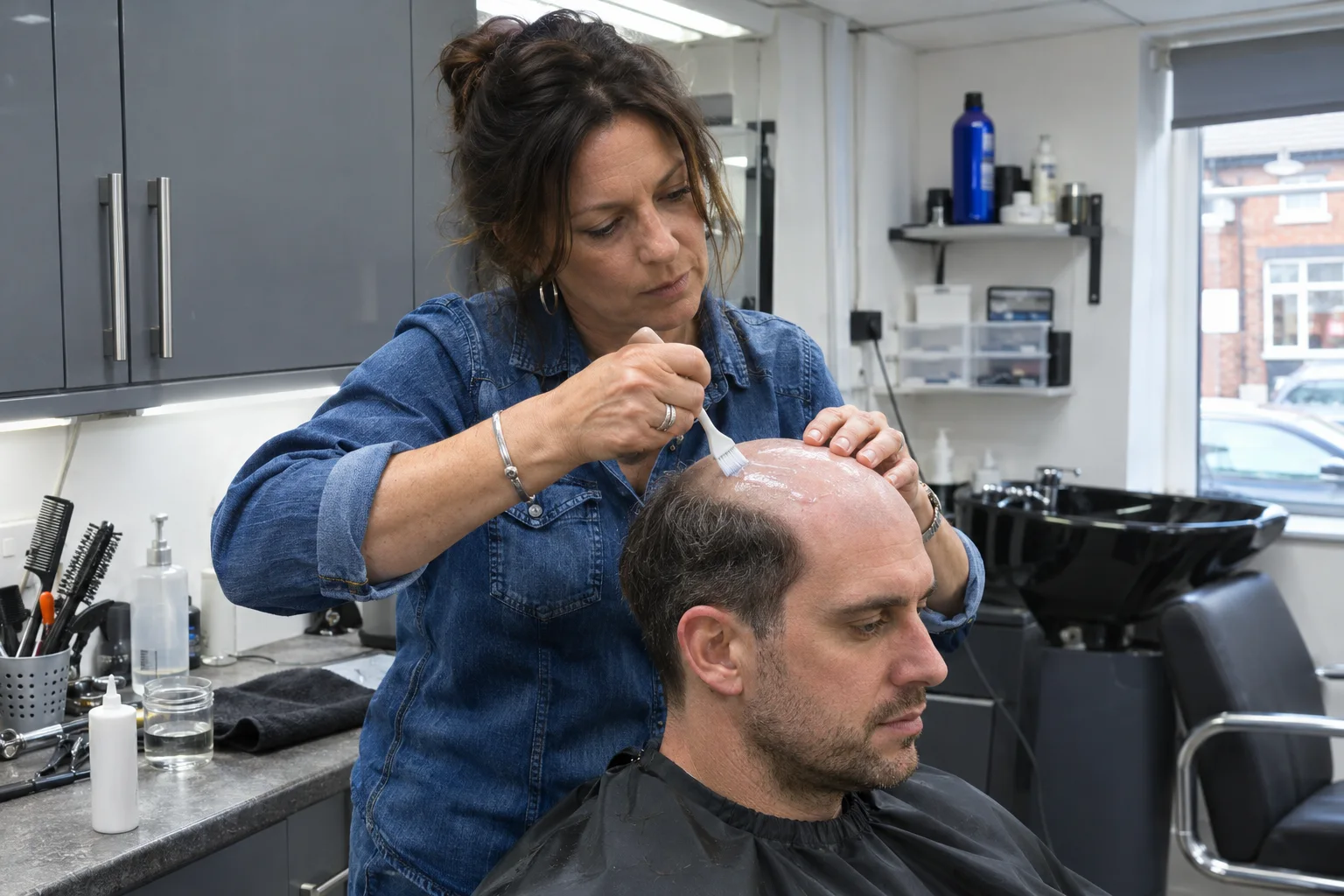
A removable piece may suit someone who wants to take their hair off at home or overnight. A bonded system may suit someone who prefers to keep their hair attached between scheduled maintenance appointments. Both approaches involve care, but the routine and the level of handling are different.
A name such as semi-permanent can be misleading if it makes the maintenance sound optional. Ask precisely how the system comes off, who removes it, what happens at a refit and whether you will need to do any work at home. Be clear about what you are comfortable managing before making a choice.
The base and the hair deserve a closer look
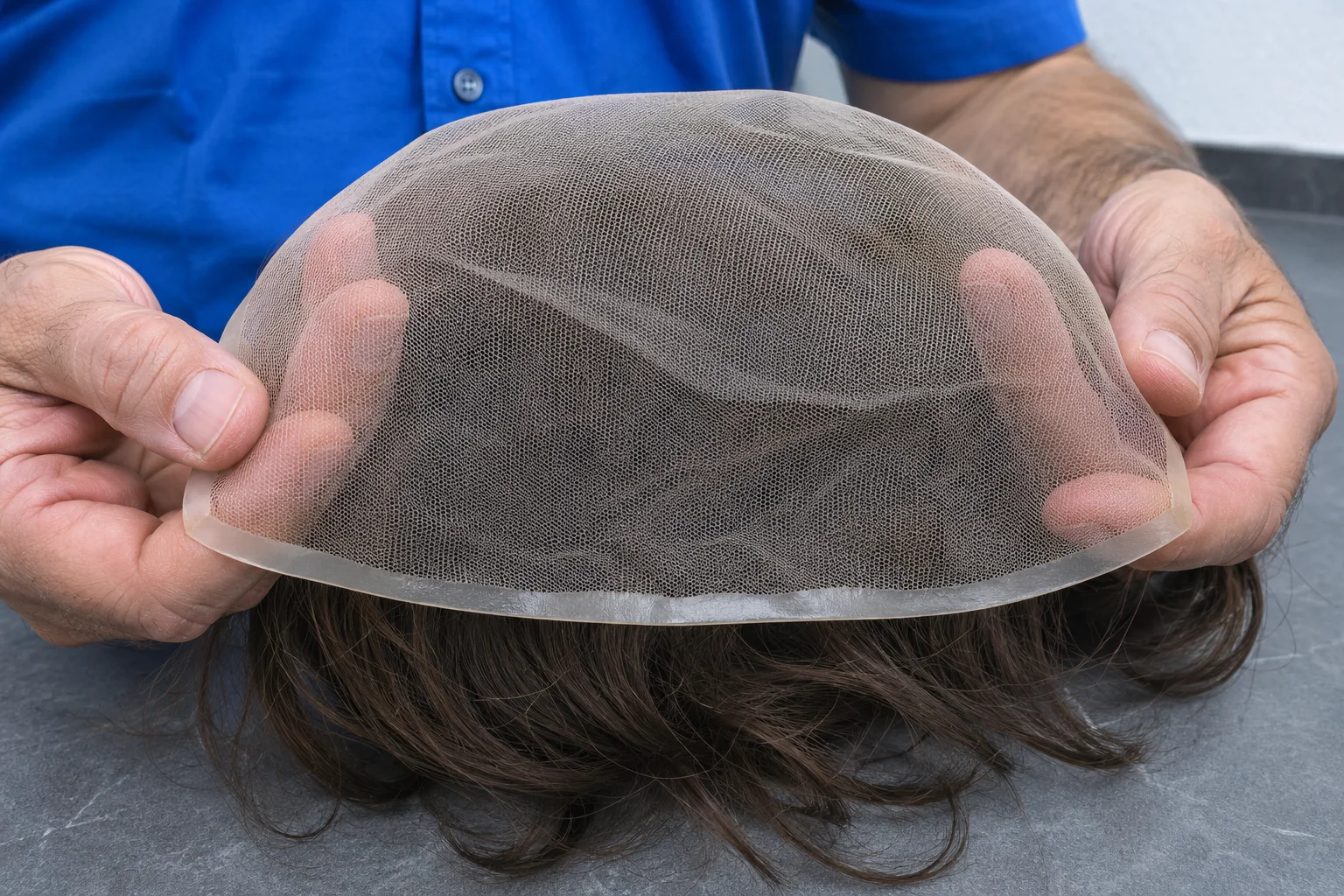
Lace, skin and combination bases each behave differently. Human hair can offer styling flexibility, while other fibre types have their own care requirements and heat restrictions. A product described simply as premium gives you very little useful information unless the provider explains its construction.
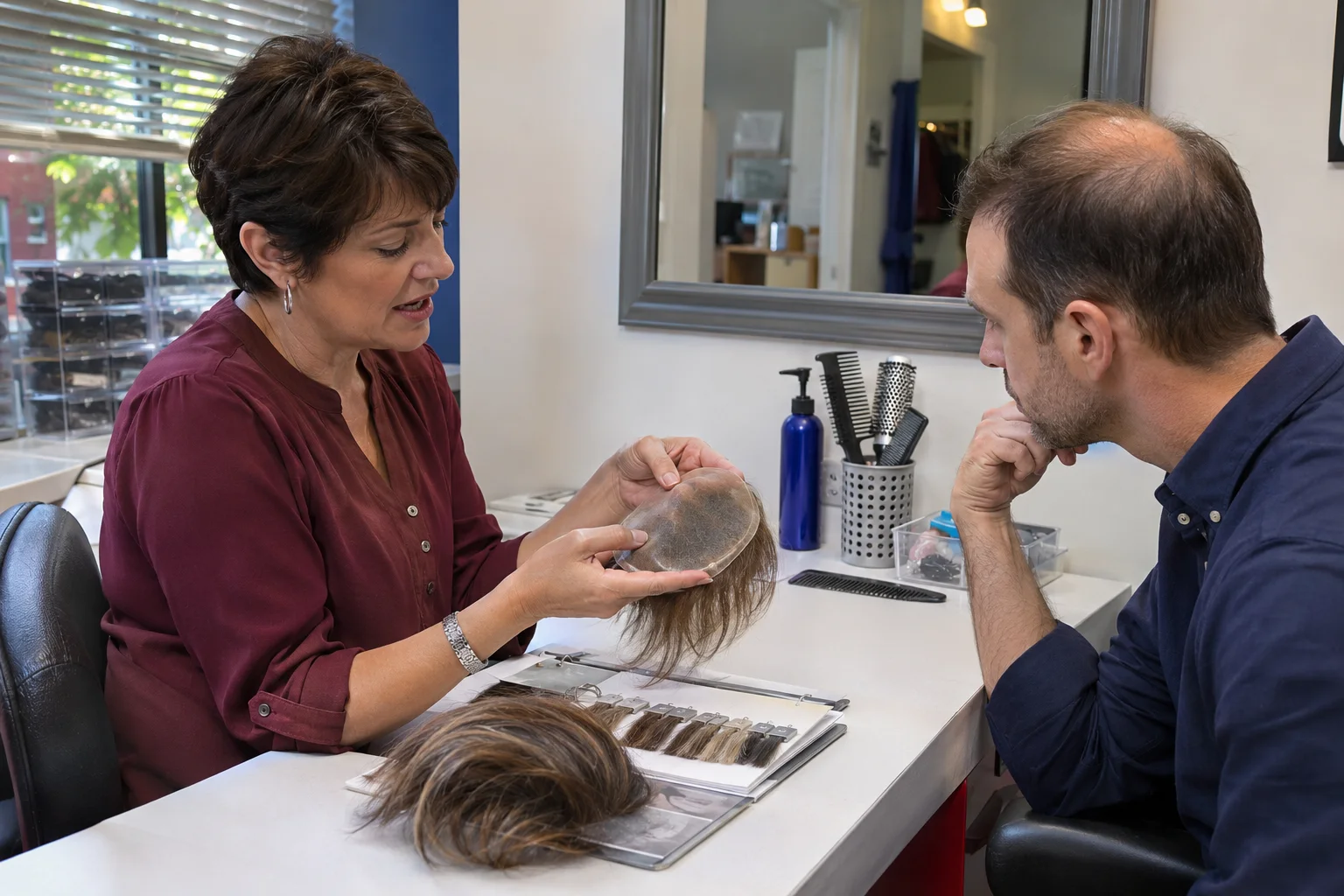
Ask to see a sample. Look at the hairline, the underside and how the hair moves. Discuss the texture and density you want, including grey. For a first system, a familiar hairstyle can make the transition feel easier than changing the colour, length and density all at once.
Questions to ask if you need a hair prosthesis
If hair loss is linked to a medical condition or treatment, suitability needs particular attention. Mention scalp sensitivity and any treatment affecting the skin, and ask your healthcare team about timing where relevant. A hair replacement consultation should help you understand practical options without trying to diagnose the cause of hair loss.
- What coverage and attachment would suit my scalp and remaining hair?
- Can I remove it myself, or will I need professional refits?
- How will it feel with glasses, hats or a head covering?
- What are the cleaning routine and replacement costs?
- If I need paperwork for a provider or insurer, what can you supply?
Choose the fit, not the label
The best option is the one that gives you an appearance you like and a routine you can manage. Ask a provider to explain the actual product rather than relying on a name that sounds more technical.
At NIC, we can help you compare the coverage, fitting and care involved. You can arrive asking for a wig, a prosthesis or a system. We will start with what you need from your hair.